
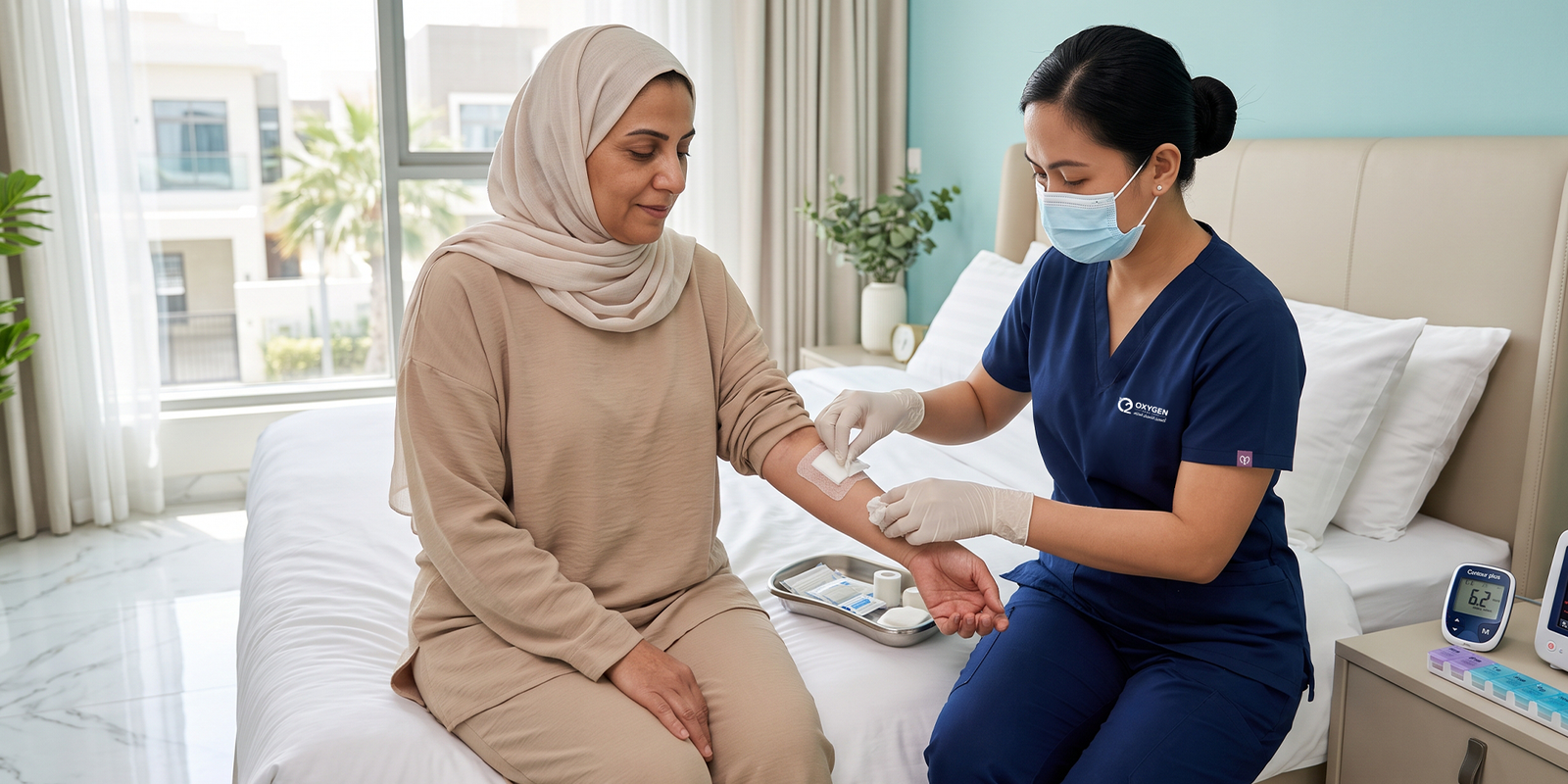
Most families picture a home visit as a nurse arriving, checking a blood pressure reading and leaving. The reality is far more involved. Home care for nurses is a full clinical discipline: assessment, treatment, documentation and family coordination, all delivered without the safety net of a hospital corridor. Understanding what home care for nurses genuinely involves helps families judge whether a provider is doing the job properly, and helps anyone considering the profession know what the role demands. At Oxygen home care, our DHA certified nurses have followed this routine across eleven years of practice. Here is what an actual working day looks like.
What Home Care for Nurses Means in Practice?
A home care nurse delivers skilled clinical treatment inside the patient’s residence. That is the line separating home care for nurses from general caregiving: a caregiver assists with daily living, while a nurse carries clinical responsibility for wounds, medication, monitoring and escalation.
The scope typically covers wound dressing and pressure sore prevention, medication administration and injections, vital signs assessment, chronic condition management for illnesses such as diabetes and hypertension, bedridden patient care, post operative recovery support, and structured reporting back to the treating physician. Each case runs on a written plan built around the diagnosis and the doctor’s recommendations, then adjusted as the patient’s condition changes.
A Typical Day in Home Care for Nurses
Where Home Care for Nurses Begins: The Arrival Assessment?
Every visit opens with an assessment, not a task list. The nurse reviews how the patient slept, checks pain levels, examines skin condition and records vital signs including blood pressure, temperature, heart rate and oxygen saturation. Any change since the previous visit is noted immediately, because early detection is the single greatest advantage of consistent home visits over occasional clinic appointments.
Clinical Treatment
This is the core of the visit. Depending on the case it may involve cleaning and redressing a surgical wound, administering prescribed medication or injections, monitoring blood glucose, managing pain, or repositioning a bedridden patient to prevent pressure sores. Treatment follows the physician’s orders precisely and every intervention is recorded.
Practical and Personal Support
Clinical work rarely happens in isolation. The same visit often includes assistance with bathing, dressing, grooming, feeding and safe mobility. For seniors this extends to fall prevention checks around the home and medication reminders that keep a complex schedule on track. This blend of medical and personal support is what distinguishes home care for nurses from a purely procedural hospital interaction.
Documentation and Family Handover
The visit ends where it matters most for the family: a clear explanation of what was found, what was done and what to watch for before the next visit. Notes are documented, the treating doctor is updated when needed, and the family knows exactly where things stand.
The Skills the Role Demands
Working in a patient’s home removes the immediate backup a hospital provides. There is no colleague two metres away and no crash team down the hall, so home care for nurses requires strong independent clinical judgement and the confidence to escalate early rather than wait.
It also demands genuine communication skills. A home care nurse explains conditions to worried relatives, negotiates with patients who resist treatment, and adapts a care plan to a real household rather than a controlled ward. Reliability matters just as much, because in home care the nurse is often the only healthcare professional a patient sees that week.
How Oxygen Home Health Care Structures Every Visit?
Consistency is what separates a dependable provider from an unpredictable one. Our approach to home care for nurses is built on six commitments:
DHA certified nurses on every case. Our team is certified by the Dubai Health Authority and trained to clinical standards, never general caregivers assigned to a medical situation.
Eleven years of accumulated experience. A decade of managing post operative recovery, chronic illness and complex senior care means our nurses recognise deterioration early, when it is still easy to correct.
Care plans written for one patient. Every plan follows the individual diagnosis and the treating doctor’s recommendations, then evolves as recovery progresses.
Support available 24 hours a day. Overnight cover, scheduled daily visits and continuous monitoring are all available, because clinical needs do not respect office hours.
Families kept genuinely informed. You receive clear updates after visits and coordinated communication with your physician, so nothing gets lost between appointments.
One team across every service. Home Nursing, Elderly Care, Postoperative Care at Home, Mother and Newborn Care, Baby Care at Home and Physiotherapy at Home come from a single coordinated provider, so care does not fragment when needs change.
Serving Families Across the UAE
Families searching for home nursing services in Dubai, home nursing services in Sharjah, home nursing services in Ajman or home nursing services in Abu Dhabi are all asking the same question: will a properly qualified nurse arrive, do the work correctly and communicate clearly? Our answer is the same regardless of the emirate. The clinical process stays identical, from documented assessment through written care plan to certified nurse and continuous family reporting.
Book a Home Care Nurse With Oxygen
Once you know what home care for nurses genuinely involves, judging a provider becomes straightforward. Look for certified nurses rather than untrained caregivers, a written and reviewed care plan, honest documentation, and a team that answers when you call at two in the morning. Those four standards are the foundation of professional home care for nurses, and they are exactly how Oxygen Home Health Care operates.
Speak to our team on +971 4 273 4779, message us on WhatsApp at +971 54 471 9339, or email info@oxygenhealth.ae. Tell us what your family needs and we will build the care plan around it. Qualified nurses interested in joining our team can apply through our careers page.
Frequently Asked Questions
What are the responsibilities of a homecare nurse?
A homecare nurse carries clinical responsibility for the patient between doctor visits. Core duties include assessing and recording vital signs, dressing wounds and preventing pressure sores, administering medication and injections on schedule, monitoring chronic conditions such as diabetes and hypertension, supporting post operative recovery, assisting with mobility and personal hygiene, and documenting every visit. Two responsibilities are often overlooked but matter enormously: escalating concerns to the treating physician early, and keeping the family clearly informed. A nurse who reports accurately and flags problems quickly delivers far better outcomes than one who simply completes tasks.