

Category Oxygen
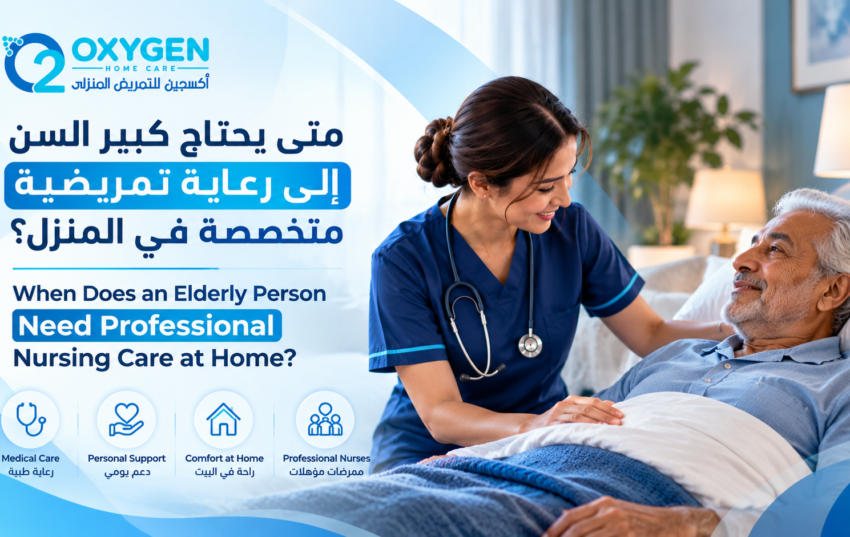
Elderly Care at Home: When Is Nursing Needed?
When Does an Elderly Person Need Professional Nursing Care at Home?
As people grow older, their healthcare needs may change. Some elderly individuals remain independent, while others develop medical conditions requiring professional nursing support.
Choosing appropriate elderly care at home is important when an older adult experiences chronic illness, reduced mobility, or complex healthcare requirements.
Professional nursing may be necessary after hospitalization, during recovery from surgery, or when patients require specialized procedures involving feeding tubes or medical devices.
This guide explains when elderly patients may need professional nursing, which conditions require specialized attention, and how families can choose suitable home healthcare services.
What Is Professional Elderly Care at Home?
Elderly care at home involves providing healthcare and personal support to older adults within their own homes, according to individual needs.
Some elderly people only require assistance with everyday activities, while others need professional nursing delivered by qualified healthcare professionals.
Unlike general caregiving, professional home nursing includes clinical monitoring, prescribed treatments, and authorized nursing procedures.
The goal is to provide appropriate healthcare support in a familiar environment when home-based care is medically suitable.
7 Signs Professional Elderly Care at Home May Be Needed
Age alone does not determine whether professional nursing is necessary. Medical conditions, treatment requirements, and individual healthcare needs are more important.
The following situations may indicate that an elderly person requires a professional nursing assessment.
1. Chronic Medical Conditions
Older adults with chronic illnesses may require regular monitoring and nursing assistance.
Conditions that sometimes involve ongoing nursing needs include:
- Diabetes requiring prescribed monitoring.
- Cardiovascular or respiratory conditions.
- Neurological disorders affecting mobility or daily functioning.
- Multiple chronic illnesses requiring coordinated healthcare support.
A qualified nurse may monitor prescribed health indicators, provide authorized medication-related assistance, and identify changes requiring medical attention.
Professional elderly care at home should follow the treating clinician’s instructions and the patient’s individual care plan.
2. Recovery After Surgery or Hospitalization
Some elderly patients return home after surgery or hospitalization but continue to require professional nursing support.
Depending on medical instructions, post-operative nursing care at home may include:
- Monitoring vital signs.
- Providing prescribed wound care.
- Authorized medication administration.
- Observing recovery and reporting concerning changes.
- Supporting prescribed nursing routines.
Professional nursing helps patients follow their recovery plan when home-based care is medically appropriate.
3. Reduced Mobility or Paralysis
Elderly patients with paralysis, neurological conditions, or prolonged bed rest may require additional nursing attention.
Limited mobility can increase the need for skin assessments, prescribed positioning routines, and pressure injury prevention measures.
A qualified nurse may provide appropriate nursing interventions and coordinate with other healthcare professionals when necessary.
The required level of elderly care at home depends on mobility limitations, medical risks, and individual assessment.
4. Alzheimer’s, Dementia, or Parkinson’s Disease
Neurological conditions such as Alzheimer’s disease, dementia, and Parkinson’s disease can affect memory, movement, communication, and daily functioning.
Not every patient with these conditions requires professional nursing.
However, nursing support may become necessary when patients experience medical complications, complex medication requirements, swallowing difficulties, or other clinical concerns.
An individual assessment helps determine whether the patient needs personal assistance, professional nursing, or both.
5. Feeding Tubes: NG Tube and PEG Tube
Some elderly patients require feeding tubes when they cannot receive sufficient nutrition through normal oral feeding.
Common types include:
- NG Tube (Nasogastric Tube): A feeding tube inserted through the nose into the stomach.
- PEG Tube (Percutaneous Endoscopic Gastrostomy): A feeding tube placed directly into the stomach through the abdominal wall.
Patients with feeding tubes may require professional nursing for prescribed tube care, monitoring, and support with their medical feeding plan.
Specialized elderly care at home may be appropriate when trained nursing professionals can safely provide the required support.
6. Tracheostomy and Complex Medical Devices
A tracheostomy is a surgically created opening in the neck into the windpipe to support breathing or airway management.
Elderly patients with tracheostomies may require specialized nursing assistance, including:
- Prescribed tracheostomy care.
- Respiratory monitoring.
- Recognizing potential airway complications.
- Following individualized care and emergency procedures.
Tracheostomy care requires specific clinical training and is different from feeding tube care.
Home nursing should only be arranged when the treating healthcare team determines that the patient’s medical needs can be managed safely at home.
7. Complex Medication and Ongoing Medical Needs
Some elderly patients take multiple prescribed medications or require treatment routines involving professional nursing responsibilities.
A qualified nurse may assist with authorized medication administration, clinical monitoring, and prescribed nursing procedures.
Patients with changing healthcare needs may also require reassessment of their existing care arrangements.
Sudden or severe symptoms require urgent medical assessment rather than waiting for routine home nursing.
Elderly Home Nursing vs General Caregiving
Families sometimes confuse professional nursing with general elderly caregiving.
Although both provide valuable support, their responsibilities are different.
| Area | Professional Home Nurse | General Caregiver |
|---|---|---|
| Main responsibility | Professional nursing and healthcare | Personal assistance and daily activities |
| Medical monitoring | Within authorized nursing scope | General observation and reporting |
| Medication administration | When professionally authorized | Permitted non-clinical assistance |
| Specialized procedures | Authorized nursing procedures | Not independently permitted |
| Complex medical conditions | Specialized nursing support | Complementary personal assistance |
When an elderly patient requires clinical procedures or specialized medical support, general caregiving should not replace qualified nursing care.
Some patients may benefit from both services, depending on their individual requirements.
Benefits of Professional Elderly Care at Home
When medically suitable, professional elderly care at home can provide several practical benefits.
Personalized Healthcare Support
Nursing services can be organized according to the patient’s medical condition, prescribed treatments, and individual healthcare requirements.
Familiar Home Environment
Older adults can receive appropriate healthcare support while remaining in familiar surroundings.
Support for Families
Qualified nurses can perform authorized nursing responsibilities that family members may not be trained to manage.
Continuity of Care
Professional nursing can help patients follow prescribed healthcare routines after hospitalization or while managing chronic medical conditions.
When Is 24-Hour Elderly Care at Home Needed?
Not every elderly patient requires continuous nursing coverage.
Some patients benefit from scheduled visits, while others may need extended shifts or 24-hour elderly care at home.
Continuous nursing may be considered when patients require frequent prescribed procedures, ongoing clinical monitoring, or complex medical-device support.
The appropriate schedule should be determined through professional assessment and medical recommendations.
How to Choose an Elderly Home Nursing Provider in the UAE
Choosing a qualified provider for elderly care at home in the UAE is particularly important when the patient requires specialized nursing procedures.
Families should consider:
- Professional licensing: Verify relevant nursing qualifications and professional authorizations.
- Medical assessment: Discuss the patient’s diagnosis, prescribed treatments, and nursing requirements.
- Individualized care plan: Confirm which services are needed and how frequently.
- Specialized experience: Check whether trained nurses can support NG tubes, PEG tubes, tracheostomy, or other complex conditions.
- Suitable schedule: Determine whether scheduled visits or continuous nursing is appropriate.
In Dubai, healthcare providers operate within the applicable regulatory framework established by the Dubai Health Authority (DHA).
Professional Elderly Care at Home in Dubai, Abu Dhabi, and Al Ain
Oxygen Home Healthcare provides professional elderly care at home and home healthcare services in Dubai, Abu Dhabi, and Al Ain.
With more than 11 years of experience, Oxygen focuses on delivering nursing support tailored to each patient’s individual healthcare needs.
Our Elderly Care services support older adults who require professional nursing assistance, including patients with complex medical conditions and specialized care requirements.
Families can also explore our Home Nursing services for broader professional nursing support.
The appropriate services and level of care depend on the patient’s medical condition and individual assessment.
Frequently Asked Questions About Elderly Care at Home
When does an elderly person need a home nurse?
An elderly person may need professional nursing when their condition requires clinical monitoring, prescribed nursing procedures, specialized medical-device care, or authorized medication administration.
Can elderly patients with feeding tubes receive nursing care at home?
Some patients with NG or PEG feeding tubes can receive nursing care at home when medically appropriate and qualified professionals are available.
Do all patients with dementia need nursing care?
No. Nursing requirements depend on the patient’s medical condition and clinical needs, not the diagnosis alone.
Does every elderly patient need 24-hour nursing?
No. Some patients only require scheduled nursing visits, while others may need extended or continuous support based on medical assessment.
Where does Oxygen provide elderly nursing services?
Oxygen Home Healthcare provides professional home healthcare services in Dubai, Abu Dhabi, and Al Ain, according to the patient’s needs and service assessment.
Choosing the Right Elderly Care at Home
Recognizing when an elderly person needs professional nursing helps families make informed healthcare decisions.
Patients with chronic conditions, post-operative needs, feeding tubes, tracheostomies, or complex medical requirements may benefit from specialized nursing when home-based care is appropriate.
Professional elderly care at home should always be based on the patient’s condition, individual assessment, and medical recommendations.
At Oxygen Home Healthcare, we provide professional elderly nursing services tailored to individual patient needs, helping families access suitable healthcare support in the comfort of home.
Oxygen — Expert Home Healthcare — Always There.
Categories
Recent Posts
Baby Nursing Care at Home: 7 Signs Your Baby Needs Professional Support
Newborn Care at Home: 7 Signs Your Baby Needs a Nurse
24 Hour Elderly Care at Home: When Is It Needed?
Elderly Care at Home: When Is Nursing Needed?