

Category Oxygen
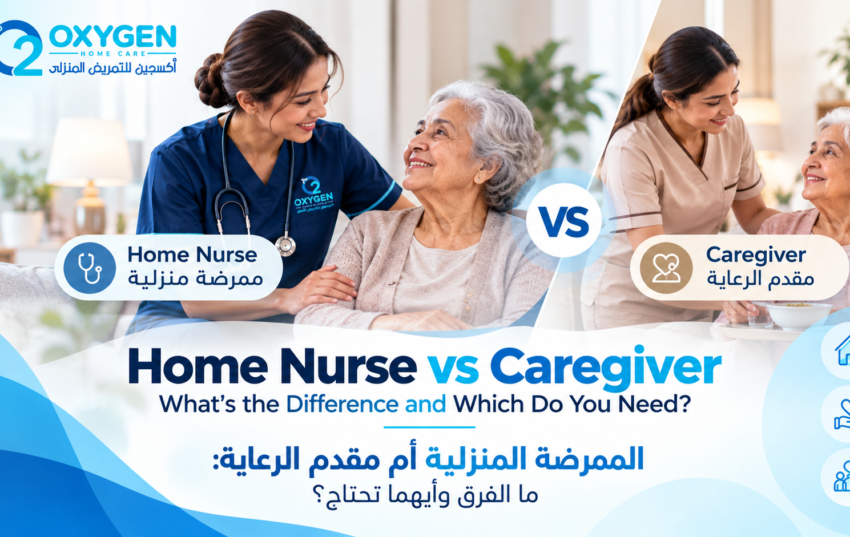
Home Nurse vs Caregiver: What’s the Difference and Which Do You Need?
Home Nurse vs Caregiver: What’s the Difference and Which Do You Need?
When a family member needs support at home, choosing the right type of care is an important decision.
Some patients need assistance with everyday activities, while others require professional nursing care because of a medical condition, recovery after surgery, or ongoing healthcare requirements.
This is where understanding the difference between a home nurse and a caregiver becomes essential.
Although the two roles may appear similar, their qualifications, responsibilities, and the type of support they provide are not the same.
In this guide, we explain the differences between a home nurse and a caregiver, the services each may provide, and how families can determine which type of support is appropriate.
What Is a Home Nurse?
A home nurse is a qualified healthcare professional who provides nursing care to patients in their homes.
Depending on local regulations, the nurse’s professional qualifications, and the patient’s care plan, home nursing may involve monitoring health conditions, supporting prescribed treatments, and providing nursing procedures that require clinical knowledge.
The purpose of professional home nursing is to help patients receive appropriate healthcare support in a familiar environment when home-based care is suitable for their condition.
A home nurse may support elderly patients, adults recovering after hospitalization, children with medical needs, and individuals who require ongoing nursing assistance.
However, not every patient requires the same level of nursing care. The services provided should be determined according to the patient’s condition, medical instructions, and individual healthcare requirements.
What Is a Caregiver?
A caregiver is someone who provides personal assistance and support to individuals who need help with everyday activities.
Caregivers may assist elderly people, individuals with reduced mobility, or people who find certain daily tasks difficult to manage independently.
Depending on their training, responsibilities, and the care arrangement, caregiver support may include:
- Assistance with dressing and personal hygiene.
- Help with everyday activities.
- Support with meals and routine personal needs.
- Companionship and general supervision.
- Non-clinical mobility assistance within appropriate safety limits.
- Helping maintain a comfortable daily routine.
These activities can be valuable for individuals who need personal support but do not necessarily require professional nursing procedures.
However, general caregiving should not be considered a substitute for qualified nursing care when a patient has medical or clinical requirements.
Home Nurse vs Caregiver: Key Differences
The main difference between a home nurse and a caregiver is the nature of the patient’s needs and the professional responsibilities involved.
| Comparison | Home Nurse | Caregiver |
|---|---|---|
| Primary role | Professional nursing and healthcare support | Personal assistance and daily living support |
| Qualifications | Relevant nursing qualifications and applicable professional licensing | Training and qualifications vary by role and jurisdiction |
| Medical monitoring | May provide clinical monitoring within professional scope | May observe and report concerns but does not independently perform clinical assessments |
| Medication support | May administer or manage prescribed medication within authorized scope | May provide permitted reminders or non-clinical assistance |
| Nursing procedures | May perform authorized nursing procedures according to the care plan | Does not independently perform procedures requiring nursing qualifications |
| Post-operative care | May provide prescribed post-operative nursing support | May assist with non-clinical daily activities |
| Complex medical conditions | May support patients requiring specialized nursing care | May provide complementary personal assistance |
| Care planning | Nursing care follows clinical assessment and medical instructions | Personal support follows the agreed care arrangement |
The appropriate choice depends on the patient’s actual requirements rather than the job title alone.
What Services Can a Home Nurse Provide?
Professional home nursing can involve different types of healthcare support depending on the patient’s condition and the nurse’s authorized scope of practice.
1. Monitoring Vital Signs
Some patients require regular monitoring of blood pressure, temperature, pulse, oxygen saturation, or other relevant health indicators.
A qualified home nurse may carry out the prescribed monitoring and help identify changes that require further medical attention.
This can be particularly important for patients recovering after hospitalization or living with conditions that require ongoing observation.
2. Medication-Related Nursing Support
Patients taking multiple medications or following complex treatment schedules may require professional assistance.
A home nurse may support the prescribed medication plan, including authorized medication administration and monitoring, according to medical instructions and applicable professional requirements.
Nurses do not independently replace the treating physician’s role in prescribing or changing treatment.
3. Post-Operative Nursing Care
After surgery, some patients can return home but still need professional nursing assistance.
Depending on the medical instructions, post-operative nursing support may include monitoring, appropriate wound care, assistance with prescribed nursing routines, and observing for changes that require medical review.
The exact services depend on the procedure, the patient’s condition, and the care plan.
4. Nursing Support for Elderly Patients
Older adults may have healthcare needs associated with chronic conditions, reduced mobility, recovery after hospitalization, or more complex medical requirements.
A home nurse can provide professional nursing support according to the patient’s needs.
Patients requiring specialized procedures or medical devices may need a more advanced nursing care plan and appropriately trained professionals.
5. Nursing Care for Children
Some children require professional nursing support because of ongoing medical conditions, recovery needs, or specialized healthcare requirements.
The nursing plan should be based on the child’s age, clinical condition, and medical instructions.
Professional pediatric nursing is different from general childcare or babysitting.
6. Support for Chronic and Complex Conditions
Patients with chronic or complex health conditions may require regular nursing observations, medication-related support, assistance with prescribed care routines, or specialized nursing procedures.
The appropriate services should always reflect the patient’s individual healthcare needs and professional assessment.
When Is a Caregiver More Appropriate?
A caregiver may be suitable when the person’s primary needs involve personal assistance rather than clinical nursing care.
For example, someone may need help with dressing, preparing for daily activities, maintaining a routine, or receiving general companionship.
Some individuals may require this support because of age-related limitations or reduced independence, without needing nursing procedures.
However, families should not assume that personal care is sufficient simply because a person is living at home.
If there are medical concerns, the individual’s needs should be assessed by an appropriately qualified healthcare professional.
When Do You Need a Home Nurse Instead of a Caregiver?
A home nurse may be more appropriate when a patient requires professional healthcare support that goes beyond general personal assistance.
Families should consider a nursing assessment when the patient:
- Requires regular clinical monitoring.
- Needs prescribed nursing procedures.
- Is recovering after surgery and has ongoing nursing requirements.
- Requires professional medication administration or monitoring.
- Has medical devices that require trained nursing support.
- Has complex or changing healthcare needs.
- Requires ongoing nursing care because of a chronic condition.
- Is an elderly patient with significant medical requirements.
- Is a child with specialized nursing needs.
- Requires care that family members or general caregivers cannot safely provide.
These situations do not automatically mean that every patient requires full-time nursing.
The appropriate level, frequency, and duration of nursing support should be determined through individual assessment and medical recommendations.
Can a Patient Need Both a Home Nurse and a Caregiver?
Yes. Some patients may benefit from both professional nursing care and general personal assistance.
For example, an elderly patient with a chronic medical condition may require nursing support for prescribed healthcare tasks while also needing assistance with everyday activities.
The two roles can complement one another when responsibilities are clearly defined.
However, a caregiver should not independently undertake nursing procedures that require professional qualifications or authorization.
A coordinated care arrangement should reflect the patient’s clinical needs, safety requirements, and daily support needs.
How to Choose the Right Home Care Professional
Before arranging support at home, families should consider several important questions.
Does the Patient Have Medical or Nursing Requirements?
The first step is to distinguish between personal assistance and healthcare needs.
If the patient requires clinical monitoring, medication administration, or professional nursing procedures, an appropriately qualified nurse may be necessary.
What Qualifications Does the Professional Have?
Families should verify that nursing professionals hold the qualifications and licenses required by the relevant healthcare regulator.
Professional responsibilities should remain within the individual’s authorized scope of practice.
What Does the Care Plan Include?
The care arrangement should clearly explain the patient’s needs, required services, professional responsibilities, and expected duration of support.
Does the Patient Need Short-Term or Long-Term Care?
Some patients require temporary assistance after surgery or hospitalization.
Others may need longer-term support because of chronic conditions or ongoing healthcare requirements.
The duration of care should reflect the patient’s actual needs.
Is the Provider Suitable for the Patient’s Condition?
Families should consider whether the healthcare provider has appropriately qualified professionals and the ability to support the patient’s specific requirements.
This is especially important for complex conditions or patients requiring specialized nursing procedures.
Home Nurse Services in the UAE
When searching for a home nurse in the UAE, families should focus on professional qualifications, appropriate healthcare licensing, and the provider’s ability to meet the patient’s nursing requirements.
Healthcare regulations and professional licensing requirements vary according to the relevant authority and location.
In Dubai, home healthcare providers operate within the applicable regulatory framework established by the Dubai Health Authority (DHA).
Oxygen Home Healthcare provides professional home nursing and healthcare services in Dubai, Abu Dhabi, and Al Ain, according to the patient’s condition and service requirements.
With more than 11 years of experience in home healthcare, Oxygen focuses on providing professional nursing support tailored to individual patient needs.
Our services include home nursing, specialized elderly care, newborn and baby nursing care, and physiotherapy at home.
Frequently Asked Questions About Home Nurses and Caregivers
What is the main difference between a home nurse and a caregiver?
A home nurse is a qualified healthcare professional who provides nursing care according to the patient’s clinical needs and care plan. A caregiver generally assists with personal care and everyday activities. Their responsibilities and permitted tasks differ.
Can a caregiver administer medication?
Medication-related responsibilities depend on local regulations, training, and the individual’s authorized role. Clinical medication administration requiring nursing qualifications should be performed by appropriately authorized healthcare professionals.
Do elderly patients always need a home nurse?
No. Some elderly people only require assistance with everyday activities, while others have medical conditions that require professional nursing support. The appropriate option depends on their healthcare needs.
Can a home nurse care for patients after surgery?
Yes, when appropriate for the patient’s condition and medical instructions. A qualified home nurse may provide prescribed post-operative nursing support within their authorized scope of practice.
Is a home nurse the same as a babysitter?
No. A home nurse provides professional healthcare and nursing services. A babysitter provides general childcare. Children with medical or nursing requirements may need qualified pediatric nursing support.
Can a patient receive nursing care at home for 24 hours?
Some patients may require continuous or extended nursing coverage, depending on their condition. The appropriate arrangement should be based on assessment, medical recommendations, and the availability of qualified nursing professionals.
Where does Oxygen provide home nursing services?
Oxygen Home Healthcare provides professional home healthcare services in Dubai, Abu Dhabi, and Al Ain, subject to the required service and individual care assessment.
Choosing the Right Professional Care at Home
Understanding the difference between a home nurse and a caregiver helps families make more informed decisions about the support their loved ones need.
A caregiver may be appropriate for general personal assistance, while a qualified home nurse is needed when care involves professional nursing responsibilities.
The decision should be based on the patient’s medical condition, daily needs, and professional assessment rather than age alone.
Oxygen Home Healthcare provides professional nursing care tailored to individual patient requirements, helping families access appropriate healthcare support in the comfort of home.
Oxygen — Expert Home Healthcare — Always There.
Categories
Recent Posts
Baby Nursing Care at Home: 7 Signs Your Baby Needs Professional Support
Newborn Care at Home: 7 Signs Your Baby Needs a Nurse
24 Hour Elderly Care at Home: When Is It Needed?
Elderly Care at Home: When Is Nursing Needed?