

Category Oxygen
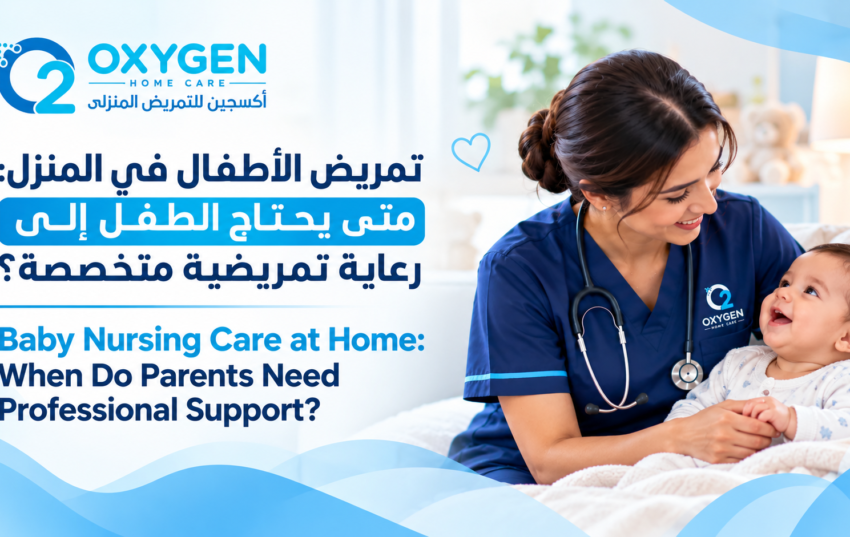
Baby Nursing Care at Home: 7 Signs Your Baby Needs Professional Support
Baby Nursing Care at Home: 7 Signs Your Baby Needs Professional Support
Baby nursing care at home can be an important healthcare service for infants who need medical monitoring, specialized nursing procedures, or professional support after leaving the hospital.
For parents, caring for a baby is one of life’s most meaningful responsibilities. From feeding and sleeping routines to monitoring growth and development, every stage brings new experiences and questions.
However, when a baby has specific medical needs, ordinary childcare may not provide the level of professional support required.
Families searching for a baby nurse at home in Dubai often want to understand whether their child needs a qualified nurse, what nursing services can be provided at home, and how to choose a reliable healthcare company.
While most healthy babies do not require professional nursing, certain medical conditions and post-hospital requirements may make specialized home nursing appropriate.
At Oxygen Home Healthcare, we understand the importance of combining professional healthcare with compassionate, individualized support for babies and their families.
This guide explains seven signs that your baby may need professional nursing care, the difference between a baby nurse and a nanny, the services available at home, and how to choose an appropriate healthcare provider in Dubai and the UAE.
What Is Baby Nursing Care at Home?
Baby nursing care at home is a professional healthcare service provided by qualified nurses to infants who require prescribed medical monitoring, specialized nursing procedures, or additional healthcare assistance in their home environment.
Unlike ordinary babysitting, professional baby nursing focuses on clinical needs and follows an individualized care plan developed in coordination with the treating healthcare team.
Depending on the baby’s medical condition, home nursing care for babies may include:
- Monitoring prescribed vital signs and clinical observations.
- Supporting medically recommended feeding routines.
- Monitoring weight, growth, and relevant health indicators.
- Administering prescribed medications within the nurse’s authorized scope of practice.
- Performing approved nursing procedures.
- Supporting medically stable babies after hospital discharge.
- Observing changes that may require medical assessment.
- Helping parents understand their baby’s prescribed care plan.
- Communicating relevant concerns to the treating pediatrician.
The level of nursing support depends on the baby’s medical requirements, clinical stability, and the recommendations of the treating healthcare professionals.
Parents interested in the wider role of professional nursing can explore our guide, What Is Home Nursing?.
For information about services specifically designed for infants, visit Oxygen’s Newborn & Baby Care service.
Baby Nurse vs Nanny: Understanding the Difference
Many families searching for a private baby nurse in Dubai are unsure whether they need a professional nurse or a general childcare provider.
Although both may assist with aspects of a baby’s daily care, their qualifications and responsibilities are different.
| Professional Baby Nurse | Nanny or General Baby Caregiver |
|---|---|
| A qualified healthcare professional | A nonmedical childcare provider |
| Focuses on nursing and clinical requirements | Focuses on routine childcare and supervision |
| May monitor prescribed clinical observations | Does not provide professional clinical monitoring |
| May administer prescribed medication when authorized | Does not independently perform medical procedures |
| Can perform approved nursing procedures | Does not perform professional nursing procedures |
| Follows an individualized medical care plan | Follows routine childcare instructions |
| Suitable for selected medical and post-hospital needs | Suitable for everyday assistance with healthy babies |
For example, parents who need assistance with routine feeding, bathing, diaper changes, or daily supervision may benefit from general childcare support.
However, a baby who requires prescribed tube feeding, clinical monitoring, or specialized medical procedures may need a qualified nurse.
A baby nurse is not simply another name for a nanny. Professional nursing involves clinical responsibilities that must be performed by appropriately qualified and authorized healthcare professionals.
To understand these differences in more detail, read Home Nurse vs Caregiver: What Is the Difference?.
7 Signs Your Baby May Need Professional Nursing Care at Home
Not every baby requires professional medical assistance.
However, some healthcare situations may indicate that professional baby nursing care at home could be beneficial.
1. Your Baby Has Recently Been Discharged From Hospital
Some infants leave the hospital with specific medical instructions that require careful follow-up.
These may include prescribed medication schedules, feeding plans, wound care, medical observations, or nursing procedures.
Depending on the baby’s condition, professional nursing may help families:
- Follow the hospital discharge plan.
- Implement prescribed nursing routines.
- Monitor specific clinical indicators.
- Support authorized medication administration.
- Recognize changes requiring medical attention.
- Communicate relevant observations to the treating healthcare team.
A qualified nurse can help parents manage the nursing components of a discharge plan while allowing the baby to remain in a familiar home environment.
However, home nursing is appropriate only when the treating medical team has determined that the baby is medically suitable for home care.
Babies requiring hospital-level treatment or intensive medical monitoring should receive care in an appropriate healthcare facility.
2. Your Baby Has Persistent Feeding Difficulties
Feeding is essential for healthy infant growth, hydration, and development.
Some babies experience ongoing problems with breastfeeding, bottle-feeding, sucking, swallowing, or consuming enough milk.
Potential concerns include:
- Persistent difficulty completing feeds.
- Becoming unusually tired during feeding.
- Poor weight gain identified by a healthcare professional.
- Repeated feeding intolerance.
- Difficulty following a prescribed feeding plan.
- Reduced feeding that raises concerns about hydration or nutrition.
Persistent feeding difficulties should be assessed by a pediatrician to determine the underlying cause.
When clinically appropriate, a qualified baby nurse may help implement prescribed feeding instructions, observe feeding tolerance, and document relevant changes.
Babies who cannot feed, show signs of dehydration, or become unusually sleepy require prompt medical assessment.
Professional nursing supports the medical plan but does not replace pediatric evaluation or specialist feeding assessment when needed.
3. Your Baby Requires Regular Medical Monitoring
Some infants have diagnosed medical conditions that require structured clinical follow-up.
Depending on the condition, a professional nurse may monitor:
- Prescribed vital signs.
- Feeding tolerance.
- Weight and growth observations.
- Specific respiratory indicators.
- Other clinical observations identified by the treating physician.
The nurse may document relevant findings and communicate concerning changes to the treating healthcare team.
This can be particularly important for babies whose medical needs extend beyond routine childcare.
However, professional nursing does not independently replace the physician’s role in diagnosis, treatment decisions, or medical follow-up.
4. Your Baby Was Born Prematurely and Still Needs Medical Support
A premature baby is born before 37 completed weeks of pregnancy.
Some premature infants require additional healthcare support because certain organs and body systems are still developing.
According to the World Health Organization, premature birth may be associated with medical complications that require appropriate treatment, monitoring, and follow-up.
For medically stable premature babies who have been discharged from hospital, nursing support may include:
- Following prescribed feeding schedules.
- Monitoring weight-related observations.
- Supporting recommended temperature monitoring.
- Following the pediatrician’s discharge instructions.
- Recognizing changes that require medical review.
However, being born prematurely does not automatically mean a baby needs continuous nursing care.
The appropriate level of support depends on the baby’s medical condition and the treating team’s recommendations.
For a more detailed explanation, read our guide, Newborn Care at Home: 7 Signs Your Baby Needs a Nurse.
5. Your Baby Requires Medication or Specialized Nursing Procedures
Some infants have medical conditions that require prescribed nursing procedures after leaving the hospital.
Depending on the baby’s condition, these may include:
- Administration of prescribed medications.
- Nasogastric (NG) tube feeding support.
- Gastrostomy tube care.
- Tracheostomy-related nursing care.
- Prescribed wound and dressing care.
- Monitoring of specific medical devices.
- Other authorized nursing procedures.
These procedures must be performed by appropriately qualified and trained healthcare professionals.
The need for scheduled, extended, or continuous nursing depends on the baby’s clinical condition and prescribed requirements.
Having a medical device does not automatically mean that a baby requires 24-hour nursing coverage.
Oxygen provides specialized home nursing services for selected medical needs, including certain tube-care requirements, subject to clinical suitability and professional authorization.
Families can explore our Home Nursing services to learn more about the types of nursing support available.
6. Your Baby Has a Medical Condition Requiring Ongoing Nursing Support
Some babies have congenital conditions, respiratory concerns, neurological disorders, or other diagnosed medical problems that require additional healthcare attention.
Depending on the condition, nursing responsibilities may include:
- Following an individualized medical care plan.
- Monitoring prescribed clinical observations.
- Supporting authorized nursing procedures.
- Documenting changes in the baby’s condition.
- Reinforcing instructions from the treating physician.
- Communicating concerns to the healthcare team.
For babies with complex medical conditions, nursing arrangements should be coordinated with the treating pediatrician or relevant specialist.
The purpose of home nursing is to support an established medical plan.
It is not a replacement for emergency treatment, specialist appointments, or hospital-level care.
7. Parents Need Help Managing a Complex Medical Care Plan
Some families return home with detailed healthcare instructions involving multiple medications, feeding schedules, medical equipment, and follow-up appointments.
Managing these requirements can be challenging, especially when parents are unfamiliar with specific nursing procedures.
Professional nursing may help by:
- Explaining prescribed nursing routines.
- Demonstrating approved care procedures.
- Supporting documentation of relevant clinical observations.
- Helping parents identify warning signs.
- Reinforcing medical instructions.
- Coordinating appropriate nursing follow-up.
A professional nurse does not replace the parents’ role in caring for their baby.
Instead, the nurse provides qualified clinical assistance when the baby’s healthcare requirements call for professional involvement.
What Does a Professional Baby Nurse Do at Home?
The responsibilities of a baby nurse at home in Dubai depend on the child’s medical condition and prescribed care plan.
Clinical Monitoring and Health Observations
A qualified nurse may monitor prescribed vital signs, feeding-related indicators, and other relevant clinical observations.
Concerning findings should be communicated according to the medical care plan.
Feeding and Growth Support
For babies with medically assessed feeding needs, nurses may support prescribed feeding schedules, monitor tolerance, and document weight-related observations.
Medication Administration
Where professionally authorized, nurses may administer prescribed medications according to the treating physician’s instructions.
Medication changes and treatment decisions remain the responsibility of the appropriate prescribing healthcare professional.
Specialized Nursing Procedures
Trained nurses may perform approved procedures such as prescribed tube-feeding support, wound care, or other clinically indicated nursing interventions.
Post-Hospital Nursing Support
Nurses may assist families in following discharge instructions, implementing prescribed nursing routines, and communicating with the treating healthcare team.
Parent Education
Professional nurses can help parents understand their baby’s care plan, recognize warning signs, and follow appropriate healthcare instructions.
The goal is to provide safe, individualized nursing support while keeping parents involved in their child’s daily care.
Benefits of Professional Baby Nursing Care at Home
When medically appropriate, professional nursing may offer practical advantages for babies and their families.
Care in a Familiar Environment
Medically stable infants may receive prescribed nursing support at home while continuing necessary medical appointments and specialist follow-up.
Support From Qualified Healthcare Professionals
Professional nursing provides access to appropriately trained personnel for authorized clinical responsibilities.
Individualized Nursing Arrangements
Care can be organized according to the baby’s medical requirements, whether scheduled visits or longer nursing shifts are appropriate.
Better Understanding of Medical Instructions
Qualified nurses can help families understand prescribed procedures and follow complex discharge instructions.
Continuity of Nursing Support
A structured care arrangement may support consistent documentation, communication, and implementation of the prescribed nursing plan.
Support for Parents
Professional nursing may help parents manage appropriate medical responsibilities while remaining actively involved in their baby’s everyday care.
These benefits depend on the baby’s medical needs, the quality of nursing services, and appropriate clinical oversight.
Safe Baby Care at Home: Important Practices for Parents
Professional nursing support should always complement safe daily care practices.
One important example is infant sleep safety.
The Centers for Disease Control and Prevention (CDC) recommends placing babies on their backs for sleep, using a firm and flat sleep surface, and keeping pillows, loose bedding, and soft toys out of the sleeping area.
Parents should also follow their pediatrician’s guidance regarding feeding, medication, hygiene, and medical follow-up.
A qualified nurse can reinforce appropriate instructions, but routine safety practices remain important regardless of whether professional nursing is required.
When Is Baby Nursing Care at Home Not Enough?
Although home nursing can support medically stable infants, certain symptoms require urgent medical attention.
Parents should seek immediate medical help if their baby experiences:
- Difficulty breathing or severe breathing effort.
- Blue or grey lips or skin.
- Repeated pauses in breathing.
- Seizures or unresponsiveness.
- Marked difficulty waking.
- Inability to feed or severe feeding deterioration.
- Signs of severe dehydration.
- A temperature of 38°C (100.4°F) or higher in a baby younger than three months.
- Abnormally low temperature or other signs of serious illness.
The American Academy of Pediatrics provides guidance about fever in infants and when medical evaluation is necessary.
The World Health Organization also emphasizes the importance of recognizing serious newborn health problems and obtaining timely medical care.
Professional home nursing is not a substitute for emergency medical services.
For a medical emergency in the UAE, call 998.
How to Choose the Best Baby Nursing Care Provider in Dubai
Choosing a provider for baby nursing services in Dubai is an important healthcare decision.
Parents should evaluate professional qualifications, licensing, experience, and the ability to meet their baby’s individual medical needs.
1. Check Healthcare Licensing
Choose a provider operating under the appropriate healthcare regulatory framework.
Confirm that the assigned nurse has the professional qualifications and authorization required for the baby’s care.
2. Ask About Pediatric Nursing Experience
Experience with babies, premature infants, and specific medical conditions is particularly important.
Parents should ask whether the nurse has relevant experience with their child’s healthcare requirements.
3. Request an Individualized Care Assessment
A professional healthcare provider should review the baby’s medical condition, discharge summary, prescribed procedures, and required nursing coverage before recommending a care arrangement.
4. Evaluate Communication and Care Coordination
Appropriate baby nursing may require communication with the treating pediatrician, neonatologist, or other medical specialists.
Clear communication helps support continuity of care.
5. Understand Nursing Coverage Options
Some babies may need scheduled visits, while others may require extended nursing hours or continuous care.
The correct arrangement depends on medical needs rather than a standard service package.
6. Review Service Scope and Transparency
Parents should understand which nursing services are included, what procedures can be performed at home, and when additional medical assessment is necessary.
7. Consider the Provider’s Healthcare Experience
Experience, professional responsibility, individualized care planning, and reliable communication are important when comparing home healthcare companies.
For a broader understanding of healthcare services available in the country, read Home Healthcare in UAE: Professional Care at Home with Oxygen.
How Much Does Baby Nursing Care at Home Cost in Dubai?
The cost of baby nursing care at home in Dubai depends on the baby’s medical requirements and the type of nursing support needed.
Factors that may influence pricing include:
- Number of nursing hours.
- Scheduled visits or extended nursing coverage.
- Complexity of the baby’s medical condition.
- Required nursing qualifications.
- Prescribed procedures and monitoring requirements.
- Duration and location of the service.
For example, a medically stable baby requiring occasional nursing follow-up may need a different arrangement from an infant with complex medical requirements.
Families should request an individualized assessment and quotation rather than relying solely on general price estimates.
Insurance coverage, where applicable, depends on the insurance policy, insurer, medical eligibility, and relevant authorization requirements.
To discuss your baby’s needs, contact Oxygen Home Healthcare for information about appropriate nursing arrangements.
Why Oxygen Is a Leading Choice for Home Nursing and Home Healthcare in Dubai and the UAE
When families search for the best home nursing company in Dubai or the best home healthcare company in UAE, they are usually looking for professional qualifications, experience, dependable support, and personalized care.
At Oxygen Home Healthcare, we aim to meet these expectations by combining qualified healthcare professionals with an individualized, patient-focused approach.
Oxygen is a leading choice for families seeking professional home nursing and home healthcare in Dubai and across the UAE.
As a DHA-licensed home healthcare provider with more than 11 years of experience, Oxygen offers nursing services designed around each patient’s condition and individual healthcare requirements.
DHA-Licensed Nursing Professionals
Oxygen provides home nursing services through qualified healthcare professionals, including DHA-licensed nurses.
Nursing arrangements are based on the patient’s condition and the competencies required for appropriate care.
Specialized Newborn and Baby Nursing Services
Oxygen offers professional nursing support for newborns, babies, and children with selected healthcare needs.
Services may include:
- Nursing follow-up after hospital discharge.
- Support for premature and low-birth-weight babies.
- Medically recommended feeding and growth monitoring.
- Nursing support after NICU discharge.
- Authorized nursing procedures.
- Selected tube-care requirements.
- Individualized support for babies with ongoing medical needs.
The suitability of each service depends on the baby’s condition, medical instructions, and professional scope of practice.
Learn more about our Newborn & Baby Care services.
More Than 11 Years of Home Healthcare Experience
With over 11 years of experience supporting patients and families across the UAE, Oxygen understands the importance of clinical responsibility, communication, and continuity of care.
Personalized Care Plans
Every baby has different healthcare requirements.
Oxygen focuses on understanding each patient’s condition and arranging suitable nursing support based on the available medical information and prescribed care plan.
24/7 Care and Support Options
Oxygen offers nursing arrangements and support options that can accommodate different patient requirements, including extended or continuous care where appropriate and available.
The need for continuous nursing should always be based on clinical assessment.
Comprehensive Home Healthcare Services
In addition to newborn and baby nursing, Oxygen provides:
- Professional Home Nursing.
- Elderly Care at Home.
- Newborn & Baby Care.
- Physiotherapy at Home.
Families supporting older relatives may also find our guides to 24-Hour Elderly Care at Home and Elderly Care at Home Nursing helpful when comparing care arrangements for different family members.
Professional Healthcare With a Human Approach
At Oxygen, our philosophy is built around three principles:
Professional Healthcare + Human Care + Comfort of Home.
We believe that qualified nursing services should be combined with clear communication, respect, and attention to the individual needs of patients and families.
For parents comparing the best home nursing services in Dubai and the best home healthcare services in UAE, Oxygen offers a compelling combination of healthcare experience, qualified nursing professionals, and personalized support.
Discover more about Oxygen Home Healthcare or explore our complete range of home healthcare services.
Frequently Asked Questions About Baby Nursing Care at Home
1. What is baby nursing care at home?
Baby nursing care at home is a professional healthcare service provided by qualified nurses to infants who require prescribed medical monitoring, authorized nursing procedures, or structured nursing support in their homes.
2. When should parents consider hiring a baby nurse at home?
Parents may consider professional nursing when their baby has a diagnosed medical condition, requires prescribed nursing procedures, needs structured medical monitoring, or requires additional support after hospital discharge. The appropriate level of care should be determined through medical assessment.
3. Can I hire a professional baby nurse at home in Dubai?
Yes. Professional baby nursing services are available through licensed healthcare providers in Dubai. Parents should verify professional qualifications, licensing, and the suitability of the service for their baby’s medical needs.
4. What is the difference between a baby nurse and a nanny?
A baby nurse is a qualified healthcare professional who may provide authorized clinical nursing services. A nanny is a nonmedical childcare provider who assists with routine supervision and everyday childcare activities.
5. Can a baby nurse help with feeding difficulties?
A qualified nurse may help implement a prescribed feeding plan, monitor feeding tolerance, and communicate concerns to the treating healthcare team. Persistent feeding problems should be evaluated by a pediatrician.
6. Do premature babies need professional nursing at home?
Not all premature babies need professional home nursing. Some medically stable premature infants may benefit from additional nursing support after hospital discharge, depending on their condition and the treating team’s recommendations.
7. Does a baby need nursing care for 24 hours?
Not necessarily. Some babies require scheduled nursing visits or limited hours of support. Continuous nursing may be appropriate for selected medical conditions following an individualized medical assessment.
8. Can professional nurses care for babies with feeding tubes?
Qualified and appropriately trained nurses may provide authorized tube-care procedures when clinically indicated and included within the provider’s approved services. The baby’s condition and treating team’s instructions determine the appropriate care arrangement.
9. How much does baby nursing care at home cost in Dubai?
Costs vary depending on nursing hours, medical complexity, prescribed procedures, and service duration. Families should request an individualized assessment and quotation.
10. Is Oxygen Home Healthcare one of the leading home nursing providers in Dubai?
Oxygen positions itself as a leading home nursing and home healthcare provider in Dubai, offering DHA-licensed nursing professionals, personalized care plans, and more than 11 years of experience supporting families across the UAE. Families should compare providers based on qualifications, service suitability, and individual care needs.
11. Does Oxygen provide baby nursing services across the UAE?
Oxygen provides professional home healthcare services in Dubai and other service areas in the UAE, including Abu Dhabi and Al Ain. Availability of specialized baby nursing services should be confirmed with the care team for the specific location and medical requirements.
Conclusion: Choosing the Right Baby Nursing Care at Home
Understanding when a baby needs baby nursing care at home helps parents make informed decisions about professional healthcare support.
While most healthy babies can receive routine care from their parents or nonmedical caregivers, infants with specific medical conditions, prescribed nursing procedures, or complex post-hospital requirements may benefit from qualified nursing services.
The most important consideration is choosing a healthcare provider and nursing arrangement that match the baby’s actual medical needs.
At Oxygen Home Healthcare, we combine professional nursing experience, individualized care, and a commitment to supporting families in the comfort of home.
For families looking for a baby nurse at home in Dubai, professional pediatric nursing, or specialized infant healthcare support, Oxygen offers a trusted option worth considering.
Whether you are comparing the best home nursing company in Dubai or looking for a reliable home healthcare company in UAE, our team can help you explore suitable nursing arrangements for your baby.
Contact Oxygen Home Healthcare to discuss your baby’s healthcare requirements and request information about professional nursing services.
Medical Disclaimer: This article provides general educational information only and does not replace individualized medical advice, diagnosis, or treatment from a pediatrician, neonatologist, or other qualified healthcare professional. Infants with emergency symptoms require immediate medical attention.
Categories
Recent Posts
Baby Nursing Care at Home: 7 Signs Your Baby Needs Professional Support
Newborn Care at Home: 7 Signs Your Baby Needs a Nurse
24 Hour Elderly Care at Home: When Is It Needed?
Elderly Care at Home: When Is Nursing Needed?