
Category Oxygen
Newborn Care at Home: 7 Signs Your Baby Needs a Nurse
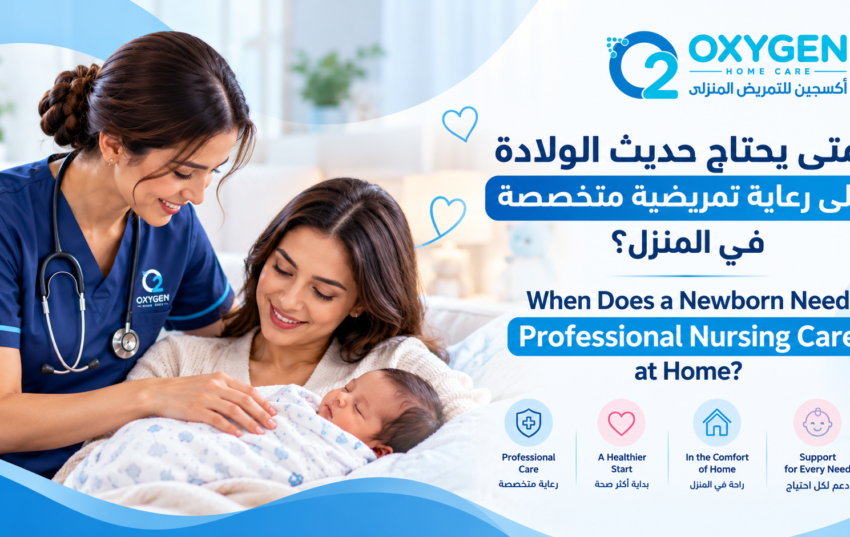
When Does a Newborn Need Professional Nursing Care at Home?
Newborn care at home can be an important part of a baby’s healthcare journey, especially when a newborn requires specialized nursing support after birth, premature delivery, or discharge from a neonatal intensive care unit (NICU).
For many families, bringing a newborn home is an exciting experience. However, when a baby has specific medical needs, parents may feel uncertain about feeding, weight gain, clinical monitoring, or following hospital discharge instructions.
While most healthy newborns do not require professional nursing services, some babies benefit from additional medical support provided by qualified healthcare professionals in the comfort of their homes.
For parents searching for newborn care at home in Dubai, understanding when professional nursing is necessary can help them choose the right level of care for their baby.
This guide explains seven situations where newborn nursing may be recommended, the difference between professional nursing and general baby care, and how to choose a trusted home healthcare provider in the UAE.
What Is Professional Newborn Care at Home?
Professional newborn care at home is a healthcare service provided by qualified nurses to babies who require medical observation, prescribed nursing procedures, or specialized follow-up outside a hospital.
Unlike routine babysitting or general childcare, professional newborn nursing focuses on a baby’s clinical needs and follows an individualized care plan developed in coordination with the treating healthcare team.
Depending on the baby’s medical condition, newborn nursing care at home may include:
- Monitoring prescribed vital signs and clinical observations.
- Supporting medically recommended feeding routines.
- Monitoring weight and growth.
- Providing post-hospital and post-NICU nursing support.
- Supporting premature and low-birth-weight newborns.
- Assisting with prescribed medications and nursing procedures.
- Observing changes that require pediatric assessment.
- Educating parents about safe, individualized newborn care.
The type and frequency of nursing support depend on the baby’s condition, medical recommendations, and the family’s circumstances.
Families looking for specialized assistance can explore Oxygen Home Healthcare’s newborn and baby care services to learn more about professional home healthcare options.
7 Signs Your Baby May Need Professional Newborn Care at Home
Not every newborn needs a professional nurse. However, certain medical conditions and post-discharge requirements may make specialized nursing support appropriate.
1. Your Baby Was Born Prematurely
A premature baby is born before 37 completed weeks of pregnancy.
Premature newborns may have additional healthcare needs because some organs and body systems are still developing.
Depending on the baby’s condition, these needs may include:
- Monitoring feeding tolerance.
- Following weight-gain recommendations.
- Observing body temperature.
- Supporting prescribed feeding schedules.
- Monitoring for changes requiring medical attention.
- Following the pediatrician’s discharge instructions.
Professional nursing can help families manage appropriate care at home after the baby has been medically cleared for discharge.
According to the World Health Organization, premature babies may require additional medical support and follow-up because of complications associated with early birth.
However, being born prematurely does not automatically mean a baby needs 24-hour nursing care.
2. Your Newborn Has Recently Been Discharged From the NICU
A neonatal intensive care unit provides specialized hospital care for newborns with significant medical needs.
Some babies admitted to the NICU have experienced premature birth, respiratory complications, feeding difficulties, infections, or other medical conditions.
After discharge, these babies may still require structured medical follow-up.
Post-NICU care at home may include:
- Following prescribed feeding plans.
- Monitoring specific clinical observations.
- Supporting weight and growth follow-up.
- Assisting with authorized nursing procedures.
- Recognizing warning signs requiring medical review.
- Supporting communication with the treating pediatrician.
A professional newborn nurse can help parents follow the hospital discharge plan while providing nursing support appropriate to the baby’s condition.
However, home nursing does not replace specialist appointments or hospital care when medically necessary.
3. Your Baby Has Feeding Difficulties or Poor Weight Gain
Feeding is one of the most important aspects of newborn development.
Some newborns experience difficulties with breastfeeding, bottle-feeding, sucking, swallowing, or consuming enough milk.
Potential concerns include:
- Persistent difficulty feeding.
- Feeding fatigue.
- Poor weight gain identified by a healthcare professional.
- Difficulty following prescribed feeding routines.
- Recurrent feeding intolerance.
A pediatrician should assess persistent feeding difficulties to identify possible medical causes and determine whether nursing or specialist feeding support is needed.
A qualified newborn nurse may assist with implementing the prescribed feeding plan, monitoring relevant observations, and helping parents understand appropriate feeding routines.
Babies who cannot feed, become unusually sleepy, or show signs of dehydration require prompt medical assessment.
4. Your Newborn Requires Medical Follow-Up for Jaundice
Neonatal jaundice is common during the first days of life and causes yellowing of the skin or eyes.
Although many cases improve without complications, some newborns require bilirubin testing, medical monitoring, or treatment.
Professional newborn nursing may support families by:
- Following prescribed monitoring instructions.
- Observing feeding-related concerns.
- Helping parents follow medical appointments.
- Monitoring relevant changes in the baby’s condition.
- Supporting the care plan established by the pediatrician.
It is important to understand that bilirubin levels cannot be reliably determined through visual observation alone.
Medical professionals must determine whether testing or treatment is necessary.
Jaundice appearing within the first 24 hours after birth, worsening jaundice, poor feeding, or unusual sleepiness requires urgent medical assessment.
5. Your Baby Requires Specialized Nursing Procedures
Some newborns have medical conditions that require prescribed nursing procedures after leaving the hospital.
Depending on the baby’s condition and the treating team’s instructions, these may include:
- Nasogastric (NG) tube feeding support.
- Gastrostomy tube care when clinically applicable.
- Tracheostomy-related nursing care.
- Prescribed medication administration.
- Monitoring specific medical observations.
- Following complex post-discharge nursing plans.
These procedures must be performed by appropriately qualified and trained healthcare professionals.
The need for continuous nursing depends on the baby’s clinical condition, stability, and prescribed care requirements.
A newborn with a medical device does not automatically require 24-hour nursing coverage.
Families requiring specialized medical assistance can learn more about Oxygen’s home healthcare services.
6. Your Newborn Has a Medical Condition Requiring Regular Monitoring
Some newborns have congenital conditions, complications after birth, or other diagnosed medical problems that require additional follow-up.
Depending on the medical condition, professional nursing may involve:
- Monitoring prescribed vital signs.
- Recording feeding and weight observations.
- Following individualized medical instructions.
- Supporting authorized nursing procedures.
- Identifying changes that require medical attention.
- Communicating relevant observations to the treating healthcare team.
The purpose of professional newborn nursing is to support an established medical care plan.
Newborns who require intensive monitoring, emergency intervention, or hospital-level treatment should receive care in an appropriate healthcare facility.
7. Your Family Needs Professional Support After a Complex Hospital Discharge
Some families return home with detailed medical instructions, feeding schedules, prescribed medications, or medical equipment.
Following these instructions can be challenging, particularly when a newborn has multiple healthcare requirements.
Professional nursing may help parents by:
- Explaining the prescribed nursing routine.
- Demonstrating approved care procedures.
- Supporting documentation of clinical observations.
- Helping parents recognize warning signs.
- Coordinating appropriate nursing follow-up.
- Reinforcing instructions from the treating healthcare team.
Professional newborn nursing does not replace parental care. Instead, it provides medical support when the baby’s healthcare needs require professional involvement.
When Is Newborn Care at Home Not Enough?
Although professional newborn care at home can support medically stable babies, certain symptoms require urgent medical attention.
Parents should seek immediate medical help if a newborn experiences:
- Difficulty breathing or blue or grey lips.
- Severe breathing effort or repeated pauses in breathing.
- Seizures or unresponsiveness.
- Marked difficulty waking.
- Inability to feed or severe feeding deterioration.
- A temperature of 38°C (100.4°F) or higher in a baby younger than three months.
- Abnormally low temperature or other signs of serious illness.
- Jaundice during the first 24 hours after birth or jaundice accompanied by concerning symptoms.
The American Academy of Pediatrics provides guidance on fever in infants and when medical evaluation is necessary.
The World Health Organization also highlights the importance of recognizing serious newborn health problems and obtaining timely medical care.
Professional home nursing is not a substitute for emergency medical services. For a medical emergency in the UAE, call 998.
Professional Newborn Nursing vs General Baby Care
Parents searching for a baby nurse at home in Dubai may encounter services that differ significantly in their purpose and professional qualifications.
Understanding the difference between medical nursing and general childcare is essential.
| Professional Newborn Nursing | General Baby Care |
|---|---|
| Provided by qualified healthcare professionals | May be provided by parents or nonmedical caregivers |
| Focuses on clinical and nursing requirements | Focuses on routine childcare |
| May include prescribed medical monitoring | Does not provide professional clinical monitoring |
| Can involve authorized nursing procedures | Does not involve nursing procedures |
| Follows an individualized medical care plan | Follows routine daily care needs |
| Suitable for selected medical or post-hospital needs | Suitable for routine support with healthy babies |
For babies with medical conditions, professional nursing qualifications and appropriate healthcare oversight are particularly important.
Parents can also read our guide, Home Nurse vs Caregiver: What Is the Difference?, to better understand the distinction between medical nursing and nonmedical support.
What Does a Professional Newborn Nurse Do at Home?
The responsibilities of a professional newborn nurse depend on the baby’s medical condition and prescribed care plan.
Clinical Monitoring and Observation
A qualified nurse may monitor prescribed vital signs, feeding patterns, weight-related observations, and other clinical indicators.
Feeding and Growth Support
For babies requiring medical follow-up, nurses may support prescribed feeding routines and document observations relevant to growth and development.
Post-NICU Nursing Support
Newborns discharged from intensive care may require assistance following medical instructions, monitoring specific concerns, and coordinating appropriate follow-up.
Specialized Medical Procedures
Where clinically indicated, trained nurses may provide authorized nursing procedures according to the treating team’s instructions.
Parent Education
Professional nurses can help families understand care plans, recognize warning signs, and follow appropriate healthcare instructions.
The goal is to support safe, individualized care while allowing families to remain involved in their baby’s daily life.
How to Choose a Newborn Nursing Care Provider in Dubai
Choosing a professional healthcare provider is an important decision for families seeking newborn care at home in Dubai.
Parents should evaluate several factors before arranging nursing services.
Healthcare Licensing
Choose a healthcare provider operating under the appropriate healthcare regulatory framework.
Confirm that the assigned nurse holds the qualifications and authorization required for the baby’s nursing needs.
Experience With Newborns
Ask whether the nurse has relevant experience with newborns, premature babies, post-NICU care, or the specific medical condition involved.
Individualized Care Planning
A professional provider should review the baby’s medical condition, discharge summary, prescribed procedures, and required nursing coverage.
Communication With Pediatricians
Appropriate newborn nursing may require communication with the baby’s pediatrician, neonatologist, or treating medical team.
Appropriate Nursing Coverage
Some babies may need scheduled nursing visits, while others may require extended or continuous nursing support.
The appropriate arrangement depends on clinical needs rather than a standard package.
Clear Scope of Nursing Services
Parents should understand which services are included, what procedures can be provided at home, and when additional medical assessment is required.
For a broader overview, explore our article on Home Healthcare in the UAE.
Why Families Choose Oxygen Home Healthcare for Newborn Care at Home
When families look for a professional newborn nursing provider in Dubai, they need more than general childcare assistance.
They need a healthcare company that understands medical responsibility, the importance of qualified nursing professionals, and the individual needs of each baby.
Oxygen Home Healthcare combines professional healthcare experience with a patient-focused approach to providing nursing services in the comfort of home.
As a DHA-licensed healthcare provider with more than 11 years of experience in the UAE, Oxygen offers specialized newborn and baby nursing support based on individual healthcare requirements.
Qualified Nursing Professionals
Oxygen provides professional nursing services through appropriately qualified healthcare professionals, with care arrangements guided by the baby’s condition and required nursing support.
Specialized Newborn and Baby Care
Our services may support premature newborns, medically stable babies after NICU discharge, infants requiring prescribed feeding support, and babies with specific nursing needs.
Individualized Nursing Care
Every newborn has different medical requirements.
Oxygen focuses on understanding the baby’s healthcare needs and arranging suitable nursing support based on the available medical information and care plan.
Professional Healthcare Experience
With more than 11 years of experience in home healthcare, Oxygen understands the importance of communication, continuity of care, and professional responsibility.
Healthcare With a Human Approach
Our philosophy combines professional nursing care with respect for the comfort of babies and their families.
This combination makes Oxygen a compelling choice for families comparing professional newborn nursing care at home in Dubai and other service areas in the UAE.
Families can learn more about Oxygen Home Healthcare or explore our home healthcare services.
How Much Does Newborn Nursing Care at Home Cost in Dubai?
The cost of professional newborn nursing in Dubai depends on the baby’s medical requirements and the level of nursing support needed.
Factors that may influence the cost include:
- The number of nursing hours.
- Scheduled visits or extended nursing coverage.
- The complexity of the baby’s medical condition.
- Required nursing qualifications.
- Prescribed procedures and monitoring needs.
- Duration and location of the service.
A medically stable baby requiring occasional nursing follow-up may need a different arrangement from a newborn with complex post-NICU requirements.
For this reason, families should request an individualized assessment rather than relying on a general price estimate.
Insurance coverage, where applicable, depends on the policy, insurer, and medical eligibility.
To discuss your baby’s requirements, contact Oxygen Home Healthcare for information about suitable nursing arrangements.
Frequently Asked Questions About Newborn Care at Home
1. Does every newborn need professional nursing care at home?
No. Most healthy newborns can receive routine care from their parents with regular pediatric follow-up. Professional nursing may be recommended when a baby has medical conditions, requires prescribed procedures, or needs additional post-hospital support.
2. Can I hire a professional newborn nurse at home in Dubai?
Yes. Professional newborn nursing services are available through licensed healthcare providers in Dubai. The appropriate level of care depends on the baby’s medical condition and nursing requirements.
3. Can premature babies receive nursing care at home?
Some premature babies can receive nursing care at home after their treating medical team determines that home care is appropriate. The level of monitoring and support depends on their medical condition and discharge plan.
4. What is post-NICU care at home?
Post-NICU care at home provides appropriate nursing support for babies who have been discharged from neonatal intensive care but still require prescribed follow-up, feeding support, or specialized nursing procedures.
5. Can a newborn nurse help with feeding difficulties?
A qualified nurse may help implement a prescribed feeding plan, observe feeding tolerance, and communicate concerns to the treating medical team. Persistent feeding difficulties should be evaluated by a pediatrician.
6. Does a newborn need 24-hour nursing care?
Not necessarily. Some babies require scheduled visits or limited nursing hours. Continuous nursing coverage should be considered when clinically indicated following an appropriate medical assessment.
7. Does Oxygen Home Healthcare provide newborn nursing services in Dubai?
Yes. Oxygen Home Healthcare provides professional newborn and baby nursing services in Dubai, with care arrangements based on the baby’s medical condition, prescribed requirements, and service availability.
Conclusion: Choosing the Right Newborn Care at Home
Understanding when a baby needs newborn care at home helps families make informed decisions about professional nursing support.
While many healthy newborns need only routine parental care and pediatric follow-up, premature babies, newborns recovering after NICU discharge, and infants with specific medical conditions may benefit from specialized nursing services.
The most important consideration is choosing care that matches the baby’s actual medical needs.
At Oxygen Home Healthcare, we combine professional nursing experience, individualized care, and a commitment to supporting families in the comfort of home.
If you are looking for newborn care at home in Dubai, professional newborn nursing, or specialized post-NICU support, our team can help you explore appropriate nursing arrangements.
Contact Oxygen Home Healthcare to discuss your baby’s healthcare requirements and request information about professional newborn nursing services.
Medical Disclaimer: This article provides general educational information and does not replace individualized medical advice from a pediatrician or neonatologist. Newborns with emergency symptoms require immediate medical attention.
Categories
Recent Posts
Baby Nursing Care at Home: 7 Signs Your Baby Needs Professional Support
Newborn Care at Home: 7 Signs Your Baby Needs a Nurse
24 Hour Elderly Care at Home: When Is It Needed?
Elderly Care at Home: When Is Nursing Needed?